People lump these two together, and that is the first mistake. A building site and a warehouse face different threats, hold different values, and ask different things from the people guarding them. Treat them the same, and you overpay on one while leaving the other exposed. Smart construction site security starts by admitting that the two jobs barely resemble each other once you look closely.
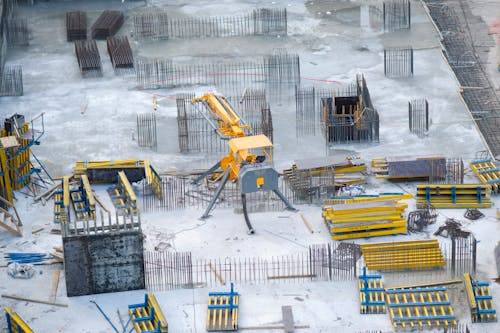
Start with the setting, because everything follows from it. A construction site changes shape every week. Walls go up, layouts shift, and access points move as the build grows. That is why construction site security and warehouse security guards call for different game plans. A warehouse stays fixed. Same doors, same racks, same flow, month after month. Warehouse security guards learn a stable map and watch for whatever breaks the pattern. Site guards work on a map that never stops moving.
The threats split, too. On a job site, the danger usually comes from outside. Someone climbs the fence after dark for copper, fuel, or tools left in the open. Construction site security mostly faces intruders who do not belong there at all. Warehouses flip that. The bigger loss often walks in through the front door during business hours, on the clock. Warehouse security guards spend as much time watching staff, drivers, and visitors as they do watching the fence line. Same uniform, almost opposite focus.
What a Job Site Actually Demands
A construction site rewards mobility. Guards cover the ground, check the perimeter, and confirm that gear got locked up at shift end. The site sits empty for long stretches, nights and weekends mostly, which is when thieves come calling. So the work leans toward patrol, lighting checks, and catching anyone who slips past the fence. A guard parked in a booth all night does little good when the action happens at the far corner of a two-acre lot.
What a Warehouse Needs Instead
A warehouse runs busy while a site sits quiet. People move through it all day. Trucks dock, pallets shift, paperwork piles up. The guard’s job tilts toward access control and watching the small things. Who signed for that load? Why did a driver take twenty minutes at a bay that needs five? A warehouse guard reads patterns and notices the break in them. The skill set looks more like observation than foot patrol, though both matter in different doses.
The Hours Rarely Match
Timing is where the contrast gets sharp. Sites face their worst risk when no one is around. Dark, empty, unwatched. Warehouses face theft while fully staffed, hidden inside normal activity. One needs heavy night coverage. The other needs eyes during the day, when a missing pallet blends into the noise of a working floor. Staff a warehouse like a job site, all night and nobody by day, and you guard an empty building while the real loss happens at noon.
Skills Do Not Transfer One-to-One
A good site guard is not automatically a good warehouse guard. The first reads terrain, weather, and the edges of a property. The second reads people, manifests, and the rhythm of a dock. Some officers do both well. Plenty do not. A company that drops the same guard into either role without a second thought tells you it does not understand the difference. Ask how they match people to the setting.
Where the Two Overlap
None of this means the jobs share nothing. A few needs run through both.
- Licensed, trained officers who log what they see
- A reporting line that reaches a dispatch center fast
- A visible presence that makes the easy target look hard
- Coverage that matches the real risk hours, not a generic schedule
The overlap is real, but it stops at the edges. Build your plan on the shared part alone, and you miss what makes each place vulnerable in its own way.
The Cost of Guessing Wrong
Picture an owner who runs both a build and a storage yard. They buy one security package, same hours, same approach, for each. The site gets light night coverage, so a thief clears the tool crib at 3 a.m. The warehouse gets a night guard too, so a worker walks stock out the back at lunch with nobody watching. Two losses, one root cause: a plan that ignored how different the two places are.
That is the trap. Owners want a single answer because a single answer is simpler. Security does not work that way. The question is not which setting matters more. Both can sink a budget. The question is whether your coverage fits the way each place actually gets hit.
So how do you choose? Look at when each property sits exposed, who poses the threat, and what a guard has to watch. A build wants mobility and night eyes. A warehouse wants daytime attention and a sharp read on the people inside. Match the coverage to the setting, not the other way around. The owners who get burned are the ones who bought one plan and hoped it stretched across two very different problems.
Featured Image Source: https://images.pexels.com/photos/4170184/pexels-photo-4170184.jpeg