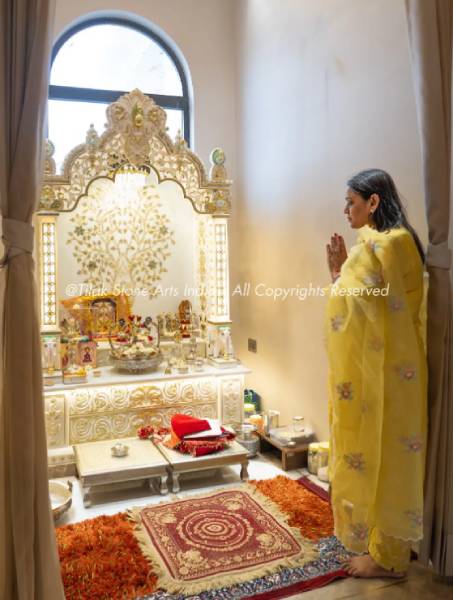
The diaspora carries stories within stone. Families scattered across continents build bridges to their homeland through sacred spaces that echo ancient traditions. The home mandir becomes more than a prayer room—it transforms into a vessel carrying generations of faith forward.
The white marble temple stands out as the centrepiece of many overseas Indian homes. Families choose these pristine structures to honour deities whilst creating visual anchors to their cultural past. The carved details whisper stories of distant temples, bringing familiar comfort to foreign lands.
Planning a home temple big size requires careful consideration of space and spiritual needs. Many families dedicate entire rooms to these sacred installations. The generous proportions allow for elaborate celebrations, family gatherings, and the passing down of traditions that might otherwise fade in foreign soil.
The Sacred Connection Across Oceans
Children born in the cities of London or Toronto often struggle to understand their parents’ midnight prayers. The home mandir bridges this gap through visual storytelling. Intricate carvings narrate epic tales whilst fragrant incense carries whispered mantras that sound like home.
The marble gleams under soft lighting, creating an atmosphere that transcends geographical boundaries. Families gather around these sacred spaces during festivals, sharing stories that their grandparents once told beneath banyan trees. The physical presence of the temple grounds abstract concepts of heritage into tangible reality.
Parents watch their children touch carved lotus petals with the same reverence they once showed in ancestral villages. This transmission happens without words—through ritual, through beauty, through the simple act of standing together before a sacred stone.
Artistic Heritage Carved in Stone
Master craftsmen spend months creating the detailed work that adorns home temples. Each curve tells a story, each figure represents divine protection over the family. The artistic elements serve dual purposes—spiritual significance and cultural preservation.
Vietnam marble offers the perfect canvas for these intricate designs. The pure white surface showcases the delicate details that make each temple unique. Families often request specific symbols or deities that connect to their ancestral regions.
The craftsmanship itself becomes an act of devotion. Artisans understand they create more than decoration—they shape the spiritual foundation for families maintaining their identity across continents. Their tools carve pathways between past and present.
Generational Bridges Through Sacred Spaces
Second-generation Indians face unique challenges. They navigate between two worlds—the heritage their parents cherish and the modern society they call home. The mandir offers a physical space where both identities can coexist peacefully.
Young professionals return from corporate offices to light evening lamps before marble deities. The ritual grounds them in tradition whilst allowing space for contemporary life. These moments create lasting impressions that shape cultural identity.
Children invite friends to see the family temple, sharing stories about festivals and traditions. The physical beauty of carved marble opens conversations about heritage that might otherwise remain private. Sacred spaces become bridges between communities.
The Psychology of Sacred Spaces at Home
Home temples create psychological anchors in otherwise shifting environments. Immigrant families often move frequently, changing addresses but carrying their portable shrine rooms. The familiar sight of carved marble provides stability amidst constant change.
The daily rituals performed before these temples establish rhythms that connect families to ancestral practices. Morning prayers, evening aarti, weekly fasting—these patterns create continuity across time zones and continents.
Stress reduction occurs naturally in these peaceful spaces. The visual beauty of white marble combined with the familiar scents of incense creates a sensory experience that transports individuals beyond immediate concerns to deeper spiritual connections.
Material Choices That Matter
Selecting the right marble makes a significant difference in how well the temple ages over time. Vietnam marble resists staining and maintains its luminous quality even in humid climates. Families investing in these pieces want materials that will serve multiple generations.
The pure white surface of Vietnam marble reflects light beautifully, creating an ethereal quality that enhances the spiritual atmosphere. Unlike other materials that might yellow or discolour, this marble maintains its pristine appearance with proper care.
Onyx accents add warmth to the overall design whilst providing contrast against the white backdrop. These material combinations create visual interest without overwhelming the sacred purpose of the space.
Festival Celebrations and Community Building
Home temples become gathering points during major festivals. Diwali, Navratri, and Janmashtami celebrations transform these private spaces into community centres. Neighbours and friends join families for prayers and traditional meals.
The generous space around larger temples allows for proper circumambulation during prayers. Children learn the correct ways to approach deities whilst adults demonstrate traditional practices. These shared moments strengthen community bonds.
Food offerings placed before marble deities become prasadam shared amongst visitors. The physical act of distributing blessed food creates connections between families whilst teaching younger generations about spiritual reciprocity.
Design Elements That Tell Stories
Temple designs often incorporate symbols specific to family traditions. Peacocks, lotus flowers, dancing figures—each element carries meaning that connects to ancestral stories. These visual narratives preserve oral traditions in permanent form.
Regional variations appear in carving styles, reflecting the diverse origins of Indian families abroad. South Indian temple designs differ from North Indian styles, allowing families to maintain specific cultural connections whilst participating in broader Hindu traditions.
The height and proportions of home temples create immediate visual impact. Families entering these spaces feel the psychological shift that marks transition from secular to sacred. The physical grandeur supports the emotional transformation.
Maintenance and Care Across Generations
Teaching children to clean and maintain marble temples passes practical knowledge alongside spiritual values. Young hands learn to polish surfaces gently whilst understanding the importance of keeping sacred spaces pristine.
The durability of quality marble means these temples can serve multiple generations without losing their beauty. Grandparents see grandchildren performing the same cleaning rituals they once taught their own children.
Regular maintenance becomes a form of meditation. The repetitive motions of cleaning marble surfaces provide quiet time for reflection whilst caring for the physical aspects of spiritual practice.
Conclusion
Home mandirs preserve Indian heritage through tangible beauty that speaks across generations. These sacred spaces anchor cultural identity whilst adapting to contemporary living situations. The investment in quality craftsmanship ensures that stories carved in stone will guide future generations toward their roots.
Families ready to create their own cultural bridge should explore temple designs that match their spiritual needs and spatial requirements. The journey toward establishing a home mandir begins with understanding how these sacred spaces can strengthen family bonds whilst preserving precious heritage.
