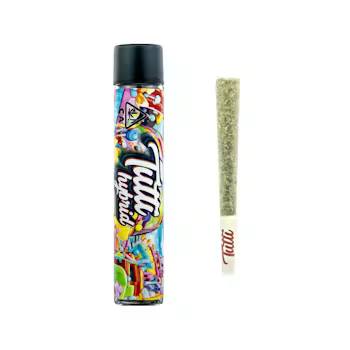
Walk up to any pre-roll shelf, and you get hit with the same wall of small boxes and tubes. Green labels, black labels, a strain name you half recognize, a percentage printed somewhere near the bottom. Everything costs somewhere between five dollars and seventeen. Nothing on the outside tells you which one burns clean and which one goes out twice before you finish it. That gap between what the package shows and what the product does is where most people waste money.
The frustrating part is that pre-rolls actually differ enormously from one another. Two joints sitting side by side can hold completely different material inside the paper. One might be whole flower, broken down and rolled. The other might be shake and trim swept off the table after processing. Both look identical through the tube. Neither package is obligated to spell out the difference in plain language, so shoppers end up guessing and then blaming themselves when the guess turns out badly.
Farmhouse Weed Dispensary Delivery Petaluma sits in a market where customers ask this question constantly, and the honest answer is that the label teaches you less than you would hope. You have to learn to read around it. Here is what actually separates a good pre-roll from a bad one, and how to spot the difference before you pay.
Why Pre-Roll Packaging Tells You So Little
California requires certain things on a cannabis label. Net weight, cannabinoid content, the licensee, batch identifiers, warnings. What the rules do not require is a description of what grade of plant material went inside.
That is the whole problem in one sentence.
A brand can roll premium flower or roll the leftovers, and the front of the box looks roughly the same either way. Some companies do volunteer the information. Look for phrases like whole flower, hand-trimmed, or single source. Those words are not regulated claims, so they are not proof, but a brand that bothers to print them is at least inviting scrutiny. Silence on the subject usually means the answer is not flattering.
The strain name deserves a similar amount of skepticism. Strain naming in cannabis has no governing body. Two farms can sell wildly different plants under the same name. It works better as a rough flavor signal than as a promise.
What Grinding and Density Do to Your Session
Here is the part almost nobody explains at the counter.
How the material is broken down before rolling changes the smoke more than the strain does. Machine-ground flower comes out uniform and slightly powdery. Pack that into paper, and it burns fast, sometimes unevenly, often hotter than you want. Coarser material rolled with more care burns slower and tastes cleaner.
You can check this yourself without opening anything. Roll the tube gently between your fingers and watch the joint move.
- Rock hard with no give usually means overpacked, which restricts airflow and produces a harsh draw.
- Loose enough to shift visibly means underpacked, and the burn will run down one side.
- Slight give with even resistance along the whole length is what you want.
- Visible stems poking against the paper mean the material was not cleaned properly
Weight matters too, in a way that surprises people. A one-gram pre-roll that feels light for its size is probably holding airy shake. Density and weight should feel roughly proportional.
Reading THC Percentage Without Getting Fooled
Every package leads with a THC number because that number sells. Shoppers scan the shelf, find the highest figure, and grab it. The industry knows this and prices accordingly.
The number is real. It just answers a narrower question than most people think.
THC percentage tells you potency. It says nothing about flavor, smoothness, burn quality, or how the experience actually feels. Plenty of 22 percent flower delivers a better half hour than 30 percent flower that was harvested early and dried too fast. Terpenes drive most of what you notice, and terpene content rarely appears on the front of a pre-roll box.
Infused pre-rolls complicate this further. When you see a number above roughly 35 percent, something got added. Hash, kief, or diamonds mixed into or coated onto the flower. That is a genuinely different product, not a stronger version of the same one. It burns differently, tastes different, and hits considerably harder. Worth trying, but going in expecting a regular joint is how people have a bad afternoon.
The Freshness Problem Nobody Talks About
Pre-rolls age faster than flower in a jar. More surface area, thin paper, and a tube that is rarely airtight.
A pre-roll sitting on a shelf for four months has lost terpenes. It will taste flat and burn harshly regardless of what the label promised. This is probably the single most overlooked factor in the entire category, and it is the reason a brand you loved once can disappoint you the next time.
Check the packaged date if it appears. Not every product prints one, and I think that is telling in itself. If the date is missing, ask. Staff at a shop with decent turnover will know when something arrived. If nobody can tell you, that is your answer.
Fresh material also looks different. Slight green visible through the paper, no brown discoloration at the tip, no dust settled at the bottom of the tube.
Format Choices That Actually Change the Value
Singles, three packs, and ten packs are not simply different quantities. They serve different purposes.
- Singles let you test a brand without commitment, and they are the correct choice for anything unfamiliar.
- Multipacks usually hold smaller joints, often half a gram, which suits shorter sessions.
- Ten packs cut the per-gram cost meaningfully, but only pay off when you already trust the producer.
- Infused singles cost more per gram and are better treated as an occasional purchase.
Buying a ten pack of something you have never tried is the most common expensive mistake in this category. Try one. If the burn is clean and the flavor holds, then buy volume.
Questions Worth Asking Before You Buy
Shopping in person gives you an advantage that ordering blind does not. You can ask, and the answer tends to be honest because the person answering has usually smoked the thing.
Try these:
- What arrived most recently in this price range?
- Is this whole flower or trim?
- Which of these burns cleanest?
- What do people bring back complaints about?
That last one gets useful answers surprisingly often. Staff remembers returns.
You can also just say the truth: everything looks the same, and you want something that burns properly. Most budtenders find that refreshing compared to customers who only ask for the highest number on the shelf.
Perhaps the simplest habit worth building is keeping a note on your phone. Brand, format, whether it burned well. Three or four entries and you stop guessing entirely, because you will have built the one thing packaging cannot give you, which is your own record of what worked.
The shelf will keep looking uniform. Your choices do not have to.