Most people don’t realize how much pressure shows up in the days right after a collision. The insurance adjuster calls, and they’re helpful, but they keep mentioning a specific repair shop. It’s in their network, they’ll say. Faster turnaround. Less paperwork hassle. The implication is that going elsewhere is going to be a problem, maybe even cost more, and a person who’s already stressed and car less tends to just go along with it.
That assumption is wrong, at least in California. Drivers here have the legal right to pick whatever auto body shop in Sacramento they want, and the insurance company cannot force a particular one on them. California Insurance Code section 758.5 spells it out, and yet adjusters still nudge people toward preferred shops every single day. Sometimes it’s because their job genuinely is easier when the work goes through a known partner. Other times, it’s because the partner shop has agreed to flat-rate labor that cuts into the quality of the actual repair.
A good auto body repair shop will tell you all of this on the first phone call without being prompted. The honest ones explain how direct repair programs work, where the trade-offs sit, and why you might still pick a non-network shop even if it adds a day or two to the process. Relux Collision is one of the family-run options in town that takes that conversation seriously, alongside a handful of other independents around Sacramento.
What an Insurance Adjuster Does
The adjuster’s job is to settle the claim for as little as the policy allows. That isn’t sinister; it’s just what they’re paid to do, and most of them are decent people doing the work as instructed. The trouble is that the system rewards them for moving fast and keeping costs down, which doesn’t always align with what yields the best repair for your car.
When an adjuster recommends a specific shop, that shop is usually part of what’s called a Direct Repair Program. The shop has agreed to certain pricing structures and labor rates in exchange for steady volume from the insurer. From the insurance company’s perspective, this is great, predictable, and easy to manage. From the customer’s perspective, it’s a mixed bag. Some of those shops do excellent work. Some cut corners to stay profitable at the contracted rates.
What Steering Looks Like in Practice
Steering is the industry term for nudging a customer toward a preferred shop. It’s illegal in California when it’s overt, but it shows up in softer forms all the time. The adjuster mentions that other shops might cause delays. Or that the insurance company “can’t guarantee” the work of a non-network shop. None of that is technically untrue, but it’s also not the whole picture, and a driver hearing it for the first time tends to take it at face value.
Knowing the script helps you push back gently. You can say you’d like to use a specific shop. You can ask that the claim proceed regardless of where the work is done. You don’t need to argue or explain. The law is on your side, and most adjusters will quietly drop the topic the moment they realize you know that.
Why the Shop You Pick Actually Matters
Cars built in the last fifteen years are not the same cars your parents drove. They have cameras tucked behind the windshield, radar units inside the bumper, sensors woven through the body for blind-spot detection and lane-keeping. Even after a moderate collision, many of these systems need recalibration, and getting it wrong can create problems that aren’t visible until months later.
A shop that’s focused on volume and squeezed margins is going to skip steps that aren’t strictly required to make the car look fixed. ADAS calibration is the big one. Diagnostic scans before and after the repair. OEM parts versus aftermarket. None of these is technically required to get a car back on the road, but skipping them results in a vehicle that drives differently and ages more quickly.
Some of the worst stories from collision survivors trace back to a quick fix that overlooked something the customer never knew to ask about. The bumper looks fine. The front-end sensor is off by 2 degrees. The driver finds out the next time someone pulls into the blind spot at 65 miles an hour, and the warning light doesn’t fire.
What to Ask Before You Hand Over the Keys
When you call shops to compare, the questions that matter aren’t the obvious ones about price and timeline. Try asking whether they perform pre-repair and post-repair diagnostic scans. Whether ADAS calibration is done in-house or outsourced. Whether they use OEM parts when the policy allows or default to aftermarket. Whether they have a written warranty, and how long it lasts.
A shop that hesitates on any of these is telling you something. The shops worth your time will answer plainly, sometimes too plainly, and they’ll go into more detail than you actually wanted. That’s the energy you want.
Also, ask how they handle disagreements with the insurance company. Will they push back when needed work gets cut from the estimate? A shop willing to advocate for repair quality puts you first, rather than just processing whatever the adjuster authorizes.
The whole point of having a right to choose is that the choice actually means something. An insurance adjuster who steers you, even softly, is hoping you won’t exercise that right because exercising it makes their job marginally harder. Your car will keep being your car for years after the claim closes. Picking a shop because it was the path of least resistance on a stressful afternoon often means living with that decision long after the adjuster has moved on. Take the extra hour. The shop you choose is the one whose work you’ll actually have to live with.
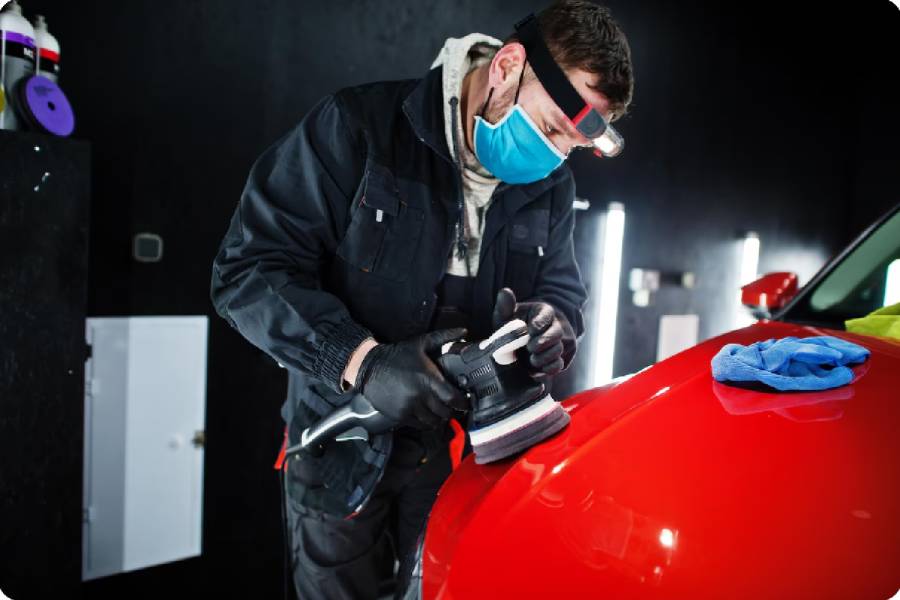
Featured Image Source: https://www.freepik.com/free-photo/car-detailing-concept-man-face-mask-with-orbital-polisher-repair-shop-polishing-orange-suv-car_27418057.htm#fromView=search&page=1&position=1&uuid=b35090a7-7490-4923-b0cb-d0ee64c28457&query=Auto+body+shop